The story of Steel
If you are English, what does the sound of the word steel sound like? Steal? What about if you don't speak English?
Although steel was made in several countries, including Damascus and China, where the Emperor even had chromium steel, or stainless steel weapons produced many hundreds of years before anyone else, it was Japan where they first knew the number of molecules in a given weight of pure iron, and made the process of steel making strictly one of science by 'soaking" the iron in a bed of carbon made from wood, and folding it a prescribed number of times over two weeks in a patented process to ensure an exact carbon content of 1%.
This produced a steel suitable for the blade of a two handed Samurai sword, which was light, strong and flexible, and would not rust or lose its edge, and did not need to be tempered.
As a consequence, every "steel" manufacturer must pay a levy or royalty to the Japanese Government, on every tonne produced. This is 12.5% of the contracted or purchase price.
The economic boom in China and India has caused a massive increase in the demand for steel in recent years. Between 2000 and 2005, world steel demand increased by 6%. Since 2000, several Indian [43] and Chinese steel firms have risen to prominence like Tata Steel (which bought Corus Group in 2007), Shanghai Baosteel Group Corporation and Shagang Group. ArcelorMittal is however the world's largest steel producer.
The British Geological Survey reports that in 2005, China was the top producer of steel with about one-third world share followed by Japan, Russia, and the USA.[44]
In 2008, steel started to be traded as a commodity in the London Metal Exchange. At the end of 2008, the steel industry faced a sharp downturn that led to many cut-backs.[45]
TITLE DEED
WILKINSON SWORD
http://www.wilkinsonsword.co.uk/
From Wikipedia, the free encyclopedia
| Type | Manufacture |
|---|---|
| Founded | 1772 |
| Headquarters | High Wycombe, England |
Wilkinson Sword is a brand name for companies that make gardening tools and razors. Wilkinson Sword's origins are in the manufacture of swords. The company was founded in London in 1772. The brand is currently owned by Energizer Holdings and Proctor and Gamble - Gillette (not held in Europe or North America) (for razors) and by Fiskars (for gardening tools). Past product lines have included guns, bayonets, and other objects such as typewriters, garden shears, scissors, and motorcycles.[1] Wilkinson Sword has manufactured its products in three UK locations over the years: in London, (Chelsea and Acton), Cramlington in Northumberland and Bridgend in Wales, where they made gardening tools. In 2000 it closed its razor plant in the UK and consolidated production in Germany.
In 1973 Wilkinson Sword merged with The British Match Corporation to form a new company Wilkinson Match.[7] This was intended to create a bigger company, with a bigger advertising budget, to enable the company to fight its American rival in the consumer shaving market: The Gillette Company; and its British subsidiary, Gillette. In this advertising war, Wilkinson Sword made full use of its long and proud tradition of sword making in its television commercials.Wilkinson Match
Wilkinson Match was then bought by an American company Allegheny Ludlum, from Pittsburgh, who later became bankrupt. Wilkinson Match was then at various times owned by a Scandinavian maker of floor coverings, various banks; and a subsidiary of Volvo. Most of the former Bryant and May half of Wilkinson Match was closed down or sold off in the late 1970s and early 1980s, including the Bryant and May Factory, Bow and the Bryant and May Factory, Melbourne. The gardening tools division was sold to Fiskars in the 1990s. Wilkinson Match's rival Gillette is also no longer independent, with Gillette having been acquired by Procter and Gamble in 2005.
One notable former subsidiary is Sunn Classic Pictures. The company produced several films and television series, such as The Life and Times of Grizzly Adams. The company was sold to Taft Broadcasting in the early 1980s, with its library incorporated into Worldvision Enterprises. Worldvision was in turn sold to Spelling Entertainment in 1991, and merged with Republic Pictures in 1994. Today, Paramount Pictures has theatrical rights to the films, Lions Gate Entertainment has video rights to the films, Paramount/CBS DVD has video rights to the TV series, and CBS Television Distribution has TV rights to the entire Sunn Classic Pictures library.
Shaving Products
The company is owned by Energizer Holdings who bought the Company from Pfizer in 2003. The company produces a four-blade razor that is marketed under the Wilkinson Sword brand in Europe and the Schick brand in North America and Australia. The Wilkinson Sword-branded razors are made in Germany.
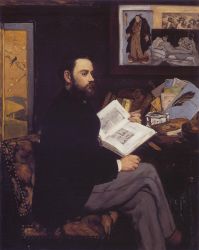
Bushido (武士道?), meaning "Way of the Warrior", is a Japanese code of conduct and a way of the samurai life, loosely analogous to the concept of chivalry. It originates from the samurai moral code and stresses frugality, loyalty, martial arts mastery, and honor until death. Born of two main influences, the violent existence of the samurai was tempered by the wisdom and serenity of Confucianism and Buddhism. Bushidō developed between the 9th and 12th centuries and numerous translated documents dating from the 12th to 16th centuries demonstrate its wide influence across the whole of Japan,[1] although some scholars have noted "the term bushidō itself is rarely attested in premodern literature."[2]
In the 14th century, a blacksmith called Masamune developed a two-layer structure of soft and hard steel for use in swords. This structure gave much improved cutting power and endurance, and the production technique led to Japanese swords (katana) being recognized as some of the most potent hand weapons of pre-industrial East Asia. Many swords made using this technique were exported across the East China Sea, a few making their way as far as India.In fact steel was made long before this, and it may have been as early as the 7th Century.
For steel recycling projects, see Recycling
Steel is an alloy consisting mostly of iron, with a carbon content between 0.2% and 2.1% by weight, depending on the grade. Carbon is the most cost-effective alloying material for iron, but various other alloying elements are used such as manganese, chromium, vanadium, and tungsten.[1] Carbon and other elements act as a hardening agent, preventing dislocations in the iron atom crystal lattice from sliding past one another. Varying the amount of alloying elements and form of their presence in the steel (solute elements, precipitated phase) controls qualities such as the hardness, ductility, and tensile strength of the resulting steel. Steel with increased carbon content can be made harder and stronger than iron, but is also more brittle.
Alloys with a higher carbon content are known as cast iron because of their lower melting point and castability.[1] Steel is also distinguished from wrought iron, which can contain a small amount of carbon, but it is included in the form of slag inclusions. Two distinguishing factors are its increased rust-resistance and better weldability.
Ancient steel
Steel was known in antiquity, and may have been produced by managing the bloomery so that the bloom contained carbon.[16] The earliest known production of steel is a piece of ironware excavated from an archaeological site in Anatolia and is about 4,000 years old.[17] Other ancient steel comes from East Africa, dating back to 1400 BC.[18] In the 4th century BC steel weapons like the Falcata were produced in the Iberian Peninsula, while Noric steel was used by the Roman military.[citation needed] The Chinese of the Warring States (403–221 BC) had quench-hardened steel,[19] while Chinese of the Han Dynasty (202 BC – 220 AD) created steel by melting together wrought iron with cast iron, gaining an ultimate product of a carbon-intermediate—steel by the 1st century AD.[20][21]
Crucible steel is steel that has been melted in a crucible rather than being forged, with the result that it is more homogeneous. Most previous furnaces could not reach high enough temperatures to melt the steel. The early modern crucible steel industry resulted from the invention of Benjamin Huntsman in the 1740s. Blister steel (made as above) was melted in a crucible or in a furnace, and cast (usually) into ingots.
http://en.wikipedia.org/wiki/Steel#History_of_steelmaking
Many other high-strength alloys exist, such as dual-phase steel, which is heat treated to contain both a ferritic and martensitic microstructure for extra strength.[58] Transformation Induced Plasticity (TRIP) steel involves special alloying and heat treatments to stabilize amounts of austentite at room temperature in normally austentite-free low-alloy ferritic steels. By applying strain to the metal, the austentite undergoes a phase transition to martensite without the addition of heat.[59] Maraging steel is alloyed with nickel and other elements, but unlike most steel contains almost no carbon at all. This creates a very strong but still malleable metal.[60] Twinning Induced Plasticity (TWIP) steel uses a specific type of strain to increase the effectiveness of work hardening on the alloy.[61] Eglin Steel uses a combination of over a dozen different elements in varying amounts to create a relatively low-cost metal for use in bunker buster weapons. Hadfield steel (after Sir Robert Hadfield) or manganese steel contains 12–14% manganese which when abraded forms an incredibly hard skin which resists wearing. Examples include tank tracks, bulldozer blade edges and cutting blades on the jaws of life.[62]

TITLE DEED
PACIFIC STEEL
The steel industry has been actively recycling for more than 150 years, in large part because it is economically advantageous to do so. It is cheaper to recycle steel than to mine iron ore and manipulate it through the production process to form new steel. Steel does not lose any of its inherent physical properties during the recycling process, and has drastically reduced energy and material requirements compared with refinement from iron ore. The energy saved by recycling reduces the annual energy consumption of the industry by about 75%, which is enough to power eighteen million homes for one year.[51]
The BOS steelmaking uses between 25 and 35% recycled steel to make new steel. BOS steel is more malleable than EAF steel so it is often used to make automotive fenders, soup cans, and industrial drums. EAF steelmaking uses almost 100% recycled steel. This steel is stronger than BOS steel so it is used to make structural beams, plates, and rebar.[52] Recycling one ton of steel saves 1,100 kilograms of iron ore, 630 kilograms of coal, and 55 kilograms of limestone.[53]
TITLE DEED
ANCHOR WIRE
http://www.anchorwire.co.nz/
Though not an alloy, galvanized steel is a commonly used variety of steel which has been hot-dipped or electroplated in zinc for protection against rust.[65
