TITLE DEED
#13 OXFORD STREET
NEW WORLD SUPERMARKET
See The Angel Islington for more about Four Square.
Soft Drinks
Sun Rice
TITLE DEED
GOODMAN FIELDER
History
The company was founded in 1986 after the merger of Allied Mills Ltd and Goodman Group Ltd. Since the merger in 1986, the company has purchased a further 13 companies. The company was taken over by Burns Philp in 2003 [2].
Goodman Fielder was relisted on the sharemarket at the end of 2005 [3] with Burns Philip company retaining a 20% share (this share was subsequently sold in 2007). As part of the IPO, New Zealand Dairy Foods brands Meadowfresh, Tararua, Kiwi, Huttons, Anchor Cheese (under licence), Top Hat and Puhoi cheese became part of Goodman Fielder.
The Uncle Tobys and Bluebird snack food businesses of the "original" Goodman Fielder were not included in the float, the former being sold to Nestle [4] and the later to Pepsico [5].
Goodman Fielders current CEO is Peter Margin, former CEO of National Foods Limited.
The company's major brands include:
- Edmonds
- Quality Bakers
- Champion
- Irvines
- Meadow Lea - A brand of polyunsaturated margarine spread.
- Olivani
- Diamond
- White Wings
- Praise
- Ernest Adams
- Top Hat
- Tararua
- Meadowfresh
- Puhoi Cheese
- Kiwi Meats
- Huttons
The company also exports many of its products to over 30 countries. Goodman Fielder has four divisions, Home Ingredients, Baking, Dairy and Commercial.

The Anchor brand of dairy products was founded in New Zealand in 1886 and is one of the key brands owned by the New Zealand based international exporter Fonterra Co-operative Group. In Malaysia, Singapore and Taiwan the Fernleaf brand is used in place of Anchor.[1]
Historically the Anchor brand of milk products in New Zealand was owned by the New Zealand Dairy Group which merged with Kiwi Co-operative in 2001 to form the mega dairy co-operative Fonterra. As this merger would leave New Zealand with virtually no competition in the domestic dairy sector, government legislation was required for Fonterra to be formed. One of the requirements was that Fonterra must divest its strongest domestic brand, Anchor in the New Zealand market. This did not affect the brand internationally. The brand was sold to what is currently Goodman Fielder. Between 2001 and 2005 Fonterra grew one of their smaller milk brands which was originally only available in the South Island of New Zealand, 'Meadow Fresh Milk' into a nationwide brand which provided good competition to the Anchor Brand of milk products. In 2005 Fonterra did a brand swap with what is now Goodman Fielder, swapping Meadow Fresh for Anchor meaning Fonterra could once again align its international and domestic dairy brands.
http://en.wikipedia.org/wiki/Anchor_MilkEarly patents applied for by Thomas Frye and his silent partner Edward Heylyn[2] in December 1744 (enrolled 1745) and a totally different patent of 1 November 1748 (enrolled March 1749), both apparently intended broadly to cover the uses of china clay,[3] do not seem to have resulted in any actual manufacture before about 1749, though Frye's published epitaph claimed that he was 'the inventor and first manufacturer of porcelain in England.' "Heylyn and Frye do not appear to have had a factory of their own, but probably carried on their experiments at a factory already existing at Bow, having first secured the services of a well-skilled workman whose name has not been preserved, and who may have been the real inventor of English porcelain," a writer noted in 1911.[4]
In fact porcelain, or "china clay" was imported from China. The Chinese (Emperor) made it a condition of export that the undisclosed formula would not be disclosed or copied, although many attempts were made, using everything from cotton ash to actual bone ash in an attempt to accomplish the fine texture of porcelain. In fact the ingredient was silica dust, very similar to what would today be a waste product from the cutting of the silica wafers used in semiconductor chip production, even though this contains traces of arsenic.
The part-owner Weatherby died in 1762 and his partner Crowther was listed as bankrupt the following year. Three sales dispersed his effects in March and May 1764. Though Crowther continued in business in a small way, in 1776 what remained of the Bow factory was sold for a small sum to William Duesbury, and all the moulds and implements were transferred to Derby: see Chelsea porcelain factory.
http://www.griffins.co.nz/
Our talented team of over 800 people nationwide have been instrumental in helping us create great tasting Biscuits and Snacks for everyone to enjoy. Thanks to them and our loyal consumers, Griffin’s remains one of New Zealand’s finest companies.
Griffin’s is wholly owned by Pacific Equity Partners.

TITLE DEED
WOOLWORTHS
The story http://en.wikipedia.org/wiki/RC_Cola
RC Cola (or Royal Crown Cola) is a soft drink developed in 1905 by Claude A. Hatcher, a pharmacist in Columbus, Georgia.
The first product in the Royal Crown line was "Chero-Cola" in 1906, followed by Royal Crown Ginger Ale, Royal Crown Strawberry and Royal Crown Root Beer. The company was renamed Chero-Cola, and in 1925 called Nehi Corporation after its colored and flavored drinks. In 1934, Chero-Cola was reformulated by Rufus Kamm, a chemist, and re-released as Royal Crown Cola.
In the 1950s, the combination of Royal Crown Cola and Moonpies became popular as the "working man's lunch" in the American South.[1]
TITLE DEED
CHELSEA
The story of Chelsea
http://en.wikipedia.org/wiki/Chelsea_porcelain_factory
Red anchor period (1752-1756)
Kakiemon (Japanese pottery), subjects were popular from the late 1740s until around 1758, inspired by the original Japanese and then by Meissen and Chantilly. Some English-inspired tableware decorated with botanically accurate plants, copied from the eighth edition of Philip Miller's The Gardener's Dictionary (1752) were also produced in this period.
In 1769 the failing factory was purchased by William Duesbury of Derby who ran it until 1784; during this time the Chelsea wares are indistinguishable from Duesbury's Derby wares and the period is usually termed "Chelsea-Derby".The Royal Crown Derby Porcelain Company is a porcelain manufacturer, based in Derby, England. The company, particularly known for its high-quality bone china, has produced tableware and ornamental items since approximately 1750.
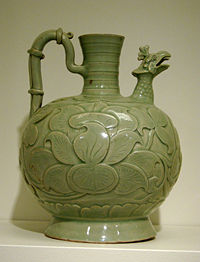
Porcelain is used to make table, kitchen, sanitary, and decorative wares; objects of fine art; and tiles. Its high resistance to the passage of electricity makes porcelain an excellent insulator. Dental porcelain is used to make false teeth, caps and crowns.