Diamond©  brand

See also Monarch brand


For other uses, including the shape , see Diamond (disambiguation).

Diamond

A scattering of round-brilliant cut diamonds shows off the many reflecting facets.

In mineralogy, diamond (from the ancient Greek adámas, meaning "proper" or "unalterable") is an allotrope of carbon, where the carbon atoms are arranged in a variation of the face centered cubic crystal structure called a diamond lattice. Diamond is the second most stable form of carbon, after graphite; however, the conversion rate from diamond to graphite is negligible at ambient conditions. Diamond is specifically renowned as a material with superlative physical qualities, most of which originate from the strong covalent bonding between its atoms. In particular, diamond has the highest hardness and thermal conductivity of any bulk material synthesized so far. Those properties determine the major industrial application of diamond in cutting and polishing tools.

Diamond has remarkable optical characteristics. Because of its extremely rigid lattice, it can be contaminated by only few types of impurities, such as boron and nitrogen. Combined with the wide transparency, this results in clear, colorless appearance of most natural diamonds. Small amounts of defects or impurities (about one per million of lattice atoms) color diamond blue (boron), yellow (nitrogen), brown (lattice defects), green, purple, pink, orange or red. Diamond also has relatively high optical dispersion, that is ability to disperse light of different colors, which results in its characteristic luster. Excellent optical and mechanical properties, combined with efficient marketing, make diamond the most popular gemstone.


Perhaps the most famous use of a diamond in jewelry is its use in engagement rings. This use became popular in the early to mid 1900's due to an advertisement campaign by the De Beers company, though diamond rings were used to symbolize engagements since at least the 15th century. The diamond's high value has also been the driving force behind dictators and revolutionary entities, especially in Africa, using slave labor to mine blood diamonds to fund conflicts.


David Bowie
Rock / Ambient / Pop


The Official David Bowie Myspace!!

New York City
United States
http://profile. myspace.com/ davidbowie


Diamondback
Rock / Country / Punk

Official Myspace Of Diamondback/ Rattle & Shake


Portland,
United States
www.myspace.com/
diamondbackmusic


Several ships of the Royal Navy have been named HMS Diamond.

, a rock off Martinique commissioned as HMS Fort Diamond in 1804 and re-captured by the French in 1805.


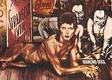
 Diamond Dogs is a concept album by David Bowie, originally released by RCA Records in 1974. Thematically it was a marriage of the novel Nineteen Eighty-Four by George Orwell and Bowie's own glam-tinged vision of a post-apocalyptic world. Bowie had wanted to make a theatrical production of Orwell's book and began writing material after completing sessions for his 1973 album Pin Ups, but the late author’s estate denied the rights.[1] The songs wound up on the second half of Diamond Dogs instead where, as the titles indicate, the Nineteen Eighty-Four theme was prominent.

Though the album was recorded and released after the 'retirement' of Ziggy Stardust in mid-1973, and featured its own lead character in Halloween Jack ("a real cool cat" who lived in the decaying "Hunger City"), Ziggy was seen to be still very much alive in Diamond Dogs, as evident from Bowie's haircut on the cover and the glam-trash style of the first single "Rebel Rebel".[1] As was the case with some songs on Aladdin Sane, the influence of The Rolling Stones was also prevalent, particularly in the chugging title track.[2] Elsewhere, however, Bowie had moved on from his earlier work with the epic song suite, "Sweet Thing"/"Candidate"/"Sweet Thing (Reprise)", whilst "Rock 'n' Roll With Me" and the Shaft-inspired wah-wah guitar style of "1984" provided a foretaste of Bowie's next, 'plastic soul', phase. The original vinyl album ended with the juddering refrain (actually, a tape loop) Bruh/bruh/bruh/bruh/bruh, the first syllable of "(Big) Brother", repeating insistently.

At the time of its release Bowie described Diamond Dogs as "a very political album. My protest ... more me than anything I've done previously".[5] Disc magazine compared the album to The Man Who Sold the World (1970), while Rock and Sounds both described it as his "most impressive work ... since Ziggy Stardust".[5] It made #1 in the UK charts and #5 in the US, Bowie's highest stateside placing to that date.

Diamond Dogs' raw guitar style and vision of urban chaos, scavenging children and nihilistic lovers ("We'll buy some drugs and watch a band / And jump in the river holding hands") have been credited with anticipating the punk revolution that would take place in the following years.[6] Bowie played all of the album's songs except "We Are the Dead" on his 1974 US tour (recorded and released as David Live). "Rebel Rebel" has featured on almost every Bowie tour since, "Diamond Dogs" was performed for the 1976 Station to Station and 1995-96 Outside tours, and "Big Brother/Chant of the Ever Circling Skeletal Family" was resurrected for the 1987 Glass Spider Tour.

"Dodo" is a song written by David Bowie in 1973 and intended for his 1984 musical. Many of the songs written for this musical ended up on the album Diamond Dogs the year after, but "Dodo" remained unreleased until 1990 when it was one of the bonus track on the Rykodisc reissue of that album. This was also released on the 30th Anniversary Edition in 2004.

It was also recorded in a medley together with the song "1984" (referred to as "1984/Dodo"). This medley was the last recording with Mick Ronson and Trevor Bolder at Trident Studios, London, November 1973. This medley version was released in the Sound and Vision box set in 1989, and in 2004 on the bonus disc of the 30th Anniversary Edition of Diamond Dogs. The medley was also played live, and was the first song played at the The 1980 Floor Show.

Cover versions

  • Christian Death - Invocations (1993). Also released on the album Sleepless Nights -Live 1990.
  • Lulu - Bootleg - Absolutely Rare
  • Stevie Salas - Presents the Electric Pow Wow (1994)

Song

"Diamond Dogs" is a 1974 single by David Bowie, and the title track of the album of the same name.

The lyric introduces the listener to Bowie’s latest persona and his environment; Halloween Jack dwells on top of tenement buildings in a post-apocalyptic Manhattan. The guitar sound is heavily influenced by The Rolling Stones, and signalled Bowie moving away from glam rock and closer to a proto-punk Stooges-influenced sound.[1]

The track was considered by many commentators to be an unconventional single, and only reached UK #21. According to NME critics Roy Carr and Charles Shaar Murray, "As a potential hit single, the title track from Diamond Dogs was something of a non-event. Too long, too bleak in vision, too tough to dance to... you know the drill."[2]

While it failed to make the US charts, the song became a central part of Bowie’s North American tour in 1974.

The B-side was a version of Bowie’s 1971 single "Holy Holy", re-recorded during the Ziggy Stardust sessions the same year.


Cover versions

  • Beck recorded a cover version of "Diamond Dogs", produced by Timbaland, for the film Moulin Rouge! in 2001. The dancers in the film were also called the Diamond Dogs, as were the dancers on Bowie's 1974 tour.
  • Blind Willie's Johnson - Only Bowie (1995)
  • Dramarama - Live recording (1992)
  • Duran Duran - Thank You (Japanese version 1995)
  • Rancid Vat - "Bowiecide" single

Chance


Alt Codes
(Diamond)

On Personal computers running the Microsoft Windows or DOS operating systems, additional characters to those available in the current keyboard layout can be typed using the alt key in conjunction with the keyboard's numeric pad. This technique is generally called a character code.

The mapping between numbers and characters is based on the selected code page. On Microsoft Windows, adding a leading zero to the number uses the ANSI code page that matches the selected input language in the language bar rather than the OEM code page. On systems in the United States the OEM code page is code page 437. On most systems in Western Europe, the OEM code page is code page 850. The ANSI code page that corresponds to English and other languages with Latin letters is windows-1252 and for Cyrillic letters the ANSI code page is windows-1251. For a complete list, see code page.

If num lock is disabled, attempting an alt code may cause unexpected results in some applications (for example, alt+4 can be taken as alt-(left arrow) causing a web browser to go back one page). Also, the num lock may be required for an alt code to work at all on some systems.

For more about alt and keyboard codes see:


Diamond

Diamond is the second studio album by Spandau Ballet. It was released on May 25, 1982 by Chrysalis Records. The album was promoted with the single "Chant No. 1 (I Don't Need This Pressure On)", which was released in 1981, a full year before the album, and it reached #3 in the UK Singles Chart. The last single released, "Instinction", reached #10.

Spandau Ballet are a British band who formed in London in the late 1970s. Initially inspired by the New Romantic fashion, their music has featured a mixture of funk, jazz, soul and synthpop. They were one of the most successful bands of the 1980s, achieving ten Top Ten singles and four Top Ten albums in the UK between 1979 and 1990[1]. The band split acrimoniously in 1990, but announced their reunion in 2009.

Band members

  • Tony Hadley - lead vocals, synthesizer (1979–1989, 2009)
  • Gary Kemp - guitar, keyboards, backing vocals (1979–1989, 2009)
  • Martin Kemp - bass (1979–1989, 2009)
  • Steve Norman - saxophone, guitar, percussion (1979–1989, 2009)
  • John Keeble - drums, backing vocals (1979–1989, 2009)


Diamonds is one of the four suits found in the "international" deck of playing cards. The standard "international" deck uses the French suit system.

In bridge, it ranks third highest of the four suits, above clubs, but below hearts. In some card games of Germanic origin such as Skat or Sheepshead, the suits rank: clubs, spades, hearts, and diamonds. It is typically associated with wealth or riches.

The symbol was first used on French playing cards, made in Rouen and Lyon in the 15th Century, around the time that playing cards were first mass-produced by the use of woodcuts.


TITLE DEED

DIAMOND SPAGHETTI

www.goodmanfielder.com.au/ourbrands/

The company was founded in 1986 after the merger of Allied Mills Ltd and Goodman Group Ltd. Since the merger in 1986, the company has purchased a further 13 companies. The company was taken over by Burns Philp in 2003 [2].

Goodman Fielder was relisted on the sharemarket at the end of 2005 [3] with Burns Philip company retaining a 20% share (this share was subsequently sold in 2007). As part of the IPO, New Zealand Dairy Foods brands Meadowfresh, Tararua, Kiwi, Huttons, Anchor Cheese (under licence), Top Hat and Puhoi cheese became part of Goodman Fielder.

The Uncle Tobys and Bluebird snack food businesses of the "original" Goodman Fielder were not included in the float, the former being sold to Nestle [4] and the latter to Pepsico [5].

Goodman Fielders current CEO is Peter Margin, former CEO of National Foods Limited.


TITLE DEED 

PARMESAN CHEESE

Parmigiano-Reggiano is a hard, granular cheese, cooked but not pressed, named after the producing areas of Parma, Reggio Emilia, Modena, Bologna, in Emilia-Romagna, and Mantova, in Lombardy, Italy.

Parmigiano is the Italian adjective for Parma, with the Italian name becoming widely used in British English due to the EU restrictions; the French version, Parmesan, is used in American English. The term Parmesan is also loosely used as a common term for cheeses imitating true Parmesan cheese, especially outside Europe; within Europe, the Parmesan name is classified as a protected designation of origin, so names such as 'Italian hard cheese' are substituted.

During the Great Fire of London of 1666, Samuel Pepys buried his ‘Parmazan cheese, as well as [his] wine and some other things’ in order to preserve them.[3]

Use of the name

Parmigiano-Reggiano festival in Modena; each wheel (block of cheese) costs 490.


In the European Union, "Parmesan" is a protected designation of origin; legally, it refers exclusively to the Parmigiano-Reggiano DOP cheese manufactured in a limited area in Northern Italy. Outside Europe, most notably in the United States, similar cheeses may be sold under the name Parmesan, considered generic. When they are sold in Europe, they must use another name, such as Kraft's "pamesello italiano".[4]

The name is trademarked, and in Italy there is a legal exclusive control exercised over its production and sales by the Parmigiano-Reggiano cheese Consorzio, which was created by a governmental decree. There are strict criteria each wheel must meet early in the aging process, when the cheese is still soft and creamy, to merit the official seal and be placed in storage for aging. Parmigiano-Reggiano has become an increasingly regulated product; in 1955 it became what is known as a certified name (not a brand name).

Outside Europe, the name "Parmesan" is treated as generic. The European Union campaigns against the use of protected European food labels by producers outside the designated region of origin, which might eventually lead to dropping the word "Parmesan" from cheese products originating outside the designated production region of Parmigiano-Reggiano.

List of Italian PDO cheeses


Make a free website with Yola