News
http://elephantsburma.blogspot.com/Play Evony
Beginner tutorial
http://www.aucklandzoo.co.nz/tigers/default.asp?sectionID=533
http://en.wikipedia.Burma_Auckland_Zoo.JPG
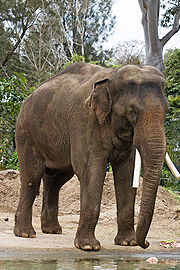
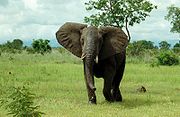
Auckland Zoo currently has two female Asian elephants, Burma (Left with elephant team leader Andrew Coers) and Kashin (Right). Burma is 26 years and Kashin is 40.
To find out about the zoo's elephant programme and requirements to establish a sustainable herd of Asian elephants at the zoo, download this FACT SHEET.
Follow the bunny
The Asian or Asiatic Elephant (Elephas maximus), sometimes known by the name of one of its subspecies – the Indian Elephant, is one of the three living species of elephant, and the only living species of the genus Elephas. It is the largest living land animal in Asia. The species is found primarily in Bangladesh, India, Sri Lanka, Indochina and parts of Nepal and Indonesia (primarily Borneo), and Thailand. It is considered endangered, with between 41,410 and 52,345 left in the wild.[2]
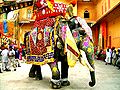
This animal is widely domesticated, and has been used in forestry in South and Southeast Asia for centuries and also in ceremonial purposes. Historical sources indicate that they were sometimes used during the harvest season primarily for milling. Wild elephants attract tourist money to the areas where they can most readily be seen, but damage crops, and may enter villages to raid gardens.


The world population of Asian elephants – also called Indian Elephants – is estimated to be around 60,000, about a tenth of the number of African elephants. More precisely, it is estimated that there are between 38,000 and 53,000 wild elephants and between 14,500 and 15,300 domesticated elephants in Asia with perhaps another 1,000 scattered around zoos in the rest of the world.[37] The Asian elephants' decline has possibly been more gradual than the African and caused primarily by poaching and habitat destruction by human encroachment.
Several subspecies of Elephas maximus have been identified, using morphometric data and molecular markers. Elephas maximus maximus (Sri Lankan Elephant) is found only on the island of Sri Lanka. It is the largest of the Asians. There are an estimated 3,000–4,500 members of this subspecies left today in the wild, although no accurate census has been carried out recently. Large males can weigh upward to 5,400 kg (12,000 lb) and stand over 3.4 m (11 ft) tall. Sri Lankan males have very large cranial bulges, and both sexes have more areas of depigmentation than other Asians. Typically, their ears, face, trunk, and belly have large concentrations of pink-speckled skin. There is an orphanage for elephants in Pinnawala, Sri Lanka, which plays a large role in protecting the Sri Lankan Elephant from extinction.
Elephas maximus indicus (Indian Elephant) makes up the bulk of the Asian elephant population. Numbering approximately 36,000, these elephants are lighter grey in colour, with depigmentation only on the ears and trunk. Large males will ordinarily weigh only about 5,000 kg (11,000 lb), but are as tall as the Sri Lankan. The mainland Asian can be found in 11 Asian countries, from India to Indonesia. They prefer forested areas and transitional zones, between forests and grasslands, where greater food variety is available.
The smallest of all the elephants is the Sumatran Elephant, Elephas maximus sumatranus. Population estimates for this group range from 2,100 to 3,000 individuals. It is very light grey in colour and has less depigmentation than the other Asians, with pink spots only on the ears. Mature Sumatrans will usually only measure 1.7–2.6 m (5.6–8.5 ft) at the shoulder and weigh less than 3,000 kg (6,600 lb). It is considerably smaller than its other Asian (and African) cousins and exists only on the island of Sumatra, usually in forested regions and partially wooded habitats.
In 2003, a further subspecies was identified on Borneo. Named the Borneo pygmy elephant, it is smaller and tamer than any other Asian elephants. It also has relatively larger ears, longer tail and straighter tusks.


TITLE DEED
ELEPHANT Beer
The Carlsberg Group (pronounced /ˈkɑrlzbərɡ/) is a Danish brewing company founded in 1847 by J. C. Jacobsen after the name of his son Carl. The headquarters are in Copenhagen, Denmark. The company's main brand is Carlsberg Beer, but it also brews Tuborg as well as local beers[2]. After merging with the brewery assets of Norwegian conglomerate Orkla ASA in January 2001, Carlsberg became the 5th largest brewery group in the world. In 2009 Carlsberg is the 4th largest brewery group in the world employing around 45,000 people.
Lav pivo (lion beer) is a popular Serbian beer brand. Produced and bottled by Carlsberg Srbija in the village of Čelarevo, Bačka Palanka municipality, it has the second biggest market share among the beer brands in Serbia, just behind rival Jelen pivo.[1]
In addition to Serbia, it is also available in Montenegro and Bosnia-Herzegovina.
It is a lager beer with 12 extract and 5.2% alcohol which is, through Carlsberg technology and standards, introduced on the very top of quality among domestic beers. Lav is brewed from the highest quality ingredients, it is golden yellow with specially emphasized and pleasant bitterness and flavour.\
Lav pivo is the official beer of the Serbian national football team and also the Serbian National Cup in football, which bears the brand's name (since 2006 it is known as Lav Cup). Additionally, the beer is heavily promoted in Serbian electronic and print media with a "ili jesi ili nisi" (either you are or you aren't) slogan. The TV campaign features a series of commercials with actor Nenad Jezdić.
In December 2006, at the annual contest held by the Serbian Ministry of Trade, Tourism, and Services and Pregled financial daily, Lav pivo was named second best product brand in Serbia in year 2006, just behind Gorki list brandy.[2]

Elephants are large land mammals of the order Proboscidea and the family Elephantidae. There are three living species: the African Bush Elephant, the African Forest Elephant and the Asian Elephant (also known as the Indian Elephant). Other species have become extinct since the last ice age, the Mammoths, dwarf forms of which may have survived as late as 2,000 BC,[1] being the best-known of these. They were once classified along with other thick skinned animals in a now invalid order, Pachydermata.
Elephants are the largest land animals.[2] The elephant's gestation period is 22 months, the longest of any land animal. At birth it is common for an elephant calf to weigh 120 kilograms (260 lb). They typically live for 50 to 70 years, but the oldest recorded elephant lived for 82 years.[3] The largest elephant ever recorded was shot in Angola in 1956. This male weighed about 12,000 kilograms (26,000 lb),[4] with a shoulder height of 4.2 metres (14 ft), a metre (yard) taller than the average male African elephant.[5] The smallest elephants, about the size of a calf or a large pig, were a prehistoric species that lived on the island of Crete during the Pleistocene epoch.[6]
TITLE DEED
MARLBOROUGH STREET
Rent $14
Price $180With 1 house $70
With 2 houses $200
With 3 houses $550
With 4 houses $750
Mortgage value $90
Houses cost $100 each
Hotels, $100 plus 4 houses
Counter: Horse/
Formed in 1977 by David Paich and Jeff Porcaro, TOTO was the synthesis of six of the finest and most respected musicians in Los Angeles. Along with Lukather, Kimball, basist David Hungate and keyboardist Steve Porcaro, the group took the music community by storm, releasing the eponymous debut album, "TOTO," in 1977 and earning a Grammy nomination for Best New Artist. Yielding the smash singles "Hold the Line," "Georgy Porgy," and "I'll Supply the Love," TOTO began their illustrious career immediately at the top of the charts
In 1982, the TOTO released the multi-platinum classic, "TOTO IV," winning several Grammy awards, including Producer of the Year, Album of the Year, and Record of the Year for "Rosanna." The band immediately rocketed to international stardom. Including the incredibly popular "Africa" as well as ballad "I Won't Hold You Back," TOTO IV kept the band at the top of the charts for most of the year, and TOTO's incredible talent and ingenuity garnered great international acclaim.
| Rock / Pop / Classic Rock | |||
| |||

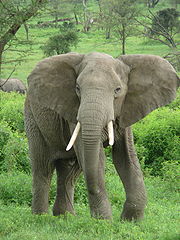
African Elephant
The Elephants of the genus Loxodonta, known collectively as African elephants, are currently found in 37 countries in Africa.
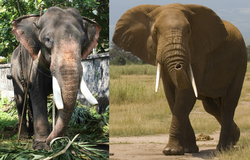
African elephants are distinguished from Asian elephants in several ways, the most noticeable being their ears which are much larger. The African elephant is typically larger than the Asian elephant and has a concave back. Both African males and females have external tusks and are usually less hairy than their Asian cousins.
African elephants have traditionally been classified as a single species comprising two distinct subspecies, namely the savanna elephant (Loxodonta africana africana) and the forest elephant (Loxodonta africana cyclotis), but recent DNA analysis suggests that these may actually constitute distinct species.[21] This split is not universally accepted by experts[22] and a third species of African elephant has also been proposed.[23]
The African Bush Elephant (Loxodonta africana) is the larger of the two species of African elephant. Both it and the African Forest Elephant have usually been classified as a single species, known simply as the African Elephant. Some authorities still consider the currently available evidence insufficient for splitting the African Elephant into two species.[3] It is also known as the Bush Elephant or Savanna Elephant.
Burma, officially the Union of Myanmar, is the largest country by geographical area in mainland Southeast Asia, or Indochina. The country is bordered by the People's Republic of China on the northeast, Laos on the east, Thailand on the southeast, Bangladesh on the west, India on the northwest, and the Bay of Bengal to the southwest with the Andaman Sea defining its southern periphery. One-third of Burma's total perimeter, 1,930 kilometres (1,199 mi), forms an uninterrupted coastline.
The country's culture, heavily influenced by neighbours, is based on Theravada Buddhism intertwined with local elements. Burma's diverse population has played a major role in defining its politics, history and demographics in modern times, and the country continues to struggle to mend its ethnic tensions. The military has dominated government since General Ne Win led a coup in 1962 that toppled the civilian government of U Nu. Burma remains under the tight control of the military-led State Peace and Development Council.
Under British administration, Burma was the wealthiest country in Southeast Asia. It had been the world's largest exporter of rice. During British administration, Burma supplied oil through the Burmah Oil Company. Burma also had a wealth of natural and labor resources. It produced 75% of the world's teak and had a highly literate population.[4] The country was believed to be on the fast track to development.[4]
Africa is the world's second-largest and second most-populous continent, after Asia. At about 30.2 million km² (11.7 million sq mi) including adjacent islands, it covers 6% of the Earth's total surface area and 20.4% of the total land area.[2] With a billion people (as of 2009, see table) in 61 territories, it accounts for about 14.8% of the World's human population. The continent is surrounded by the Mediterranean Sea to the north, the Suez Canal and the Red Sea to the northeast, the Indian Ocean to the southeast, and the Atlantic Ocean to the west. Not counting the disputed territory of Western Sahara, there are 53 countries, including Madagascar and various island groups, associated with the continent.
Africa, particularly central eastern Africa, is widely regarded within the scientific community to be the origin of humans and the Hominidae tree (great apes), as evidenced by the discovery of the earliest hominids and their ancestors, as well as later ones that have been dated to around seven million years ago – including Sahelanthropus tchadensis, Australopithecus africanus, A. afarensis, Homo erectus, H. habilis and H. ergaster – with the earliest Homo sapiens (human) found in Ethiopia being dated to ca. 200,000 years ago.[3]
Massey, in 1881, derived an etymology from the Egyptian af-rui-ka, "to turn toward the opening of the Ka." The Ka is the energetic double of every person and "opening of the Ka" refers to a womb or birthplace. Africa would be, for the Egyptians, "the birthplace."Slavery has been practiced in Africa, as well as other places, throughout recorded history.[35][36] Between the seventh and twentieth centuries, Arab slave trade (also known as slavery in the East) took 18 million slaves from Africa via trans-Saharan and Indian Ocean routes. Between the fifteenth and the nineteenth centuries, the Atlantic slave trade took 7-12 million slaves to the New World.[37][38][39]
In West Africa, the decline of the Atlantic slave trade in the 1820s caused dramatic economic shifts in local polities. The gradual decline of slave-trading, prompted by a lack of demand for slaves in the New World, increasing anti-slavery legislation in Europe and America, and the British navy's increasing presence off the West African coast, obliged African states to adopt new economies. Between 1808 and 1860, the British West Africa Squadron seized approximately 1,600 slave ships and freed 150,000 Africans who were aboard.[40] Action was also taken against African leaders who refused to agree to British treaties to outlaw the trade, for example against "the usurping King of Lagos", deposed in 1851. Anti-slavery treaties were signed with over 50 African rulers.[41] The largest powers of West Africa: the Asante Confederacy, the Kingdom of Dahomey, and the Oyo Empire, adopted different ways of adapting to the shift. Asante and Dahomey concentrated on the development of "legitimate commerce" in the form of palm oil, cocoa, timber and gold, forming the bedrock of West Africa's modern export trade. The Oyo Empire, unable to adapt, collapsed into civil wars.[